Madrid After Dark: Photographing the City on Rainy Nights
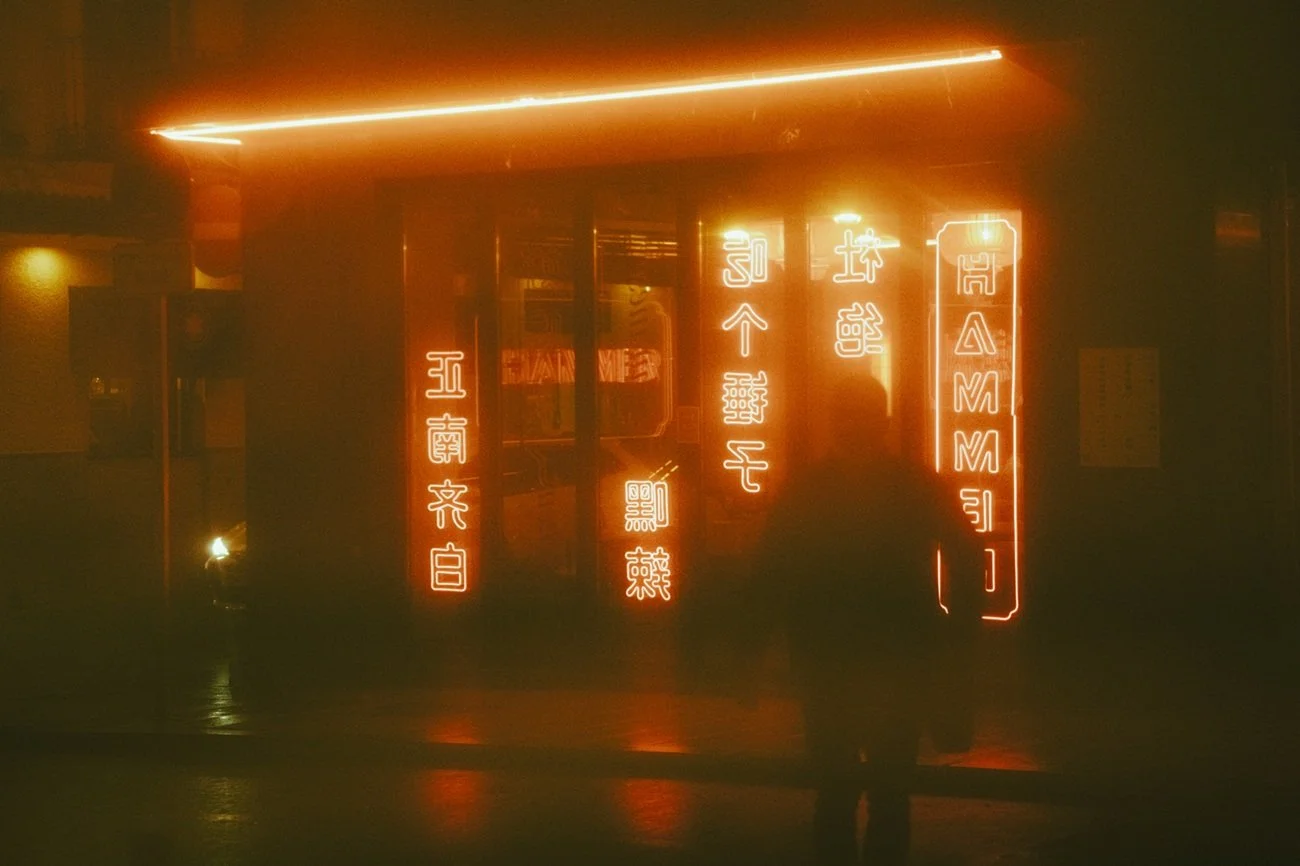
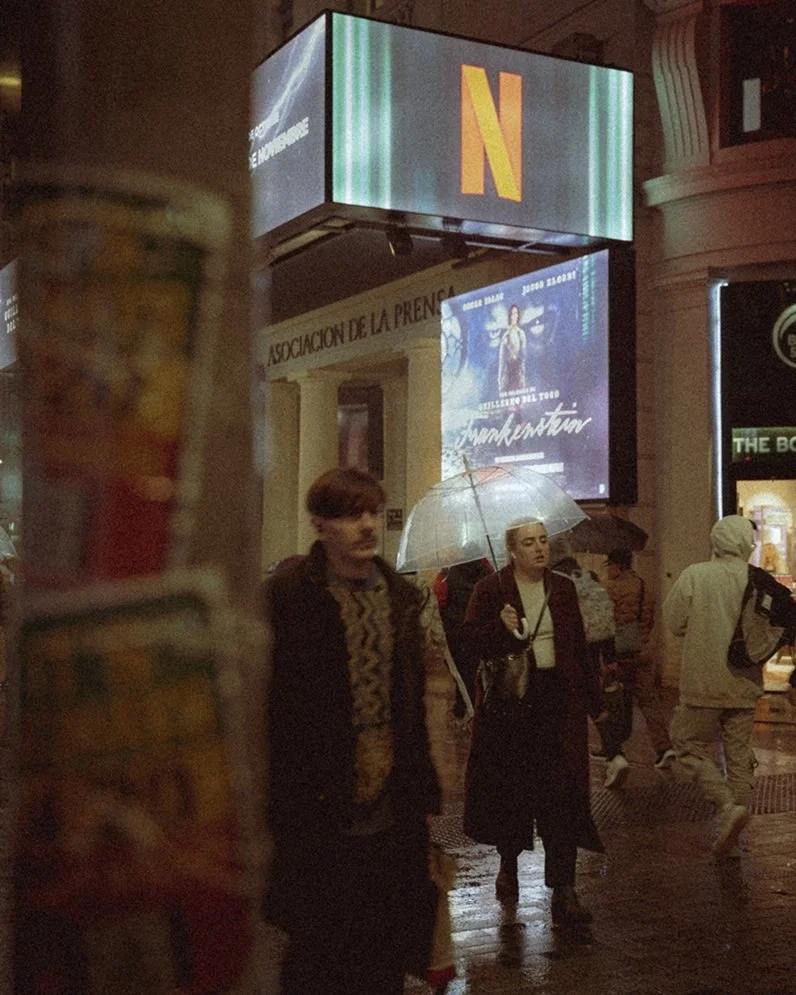
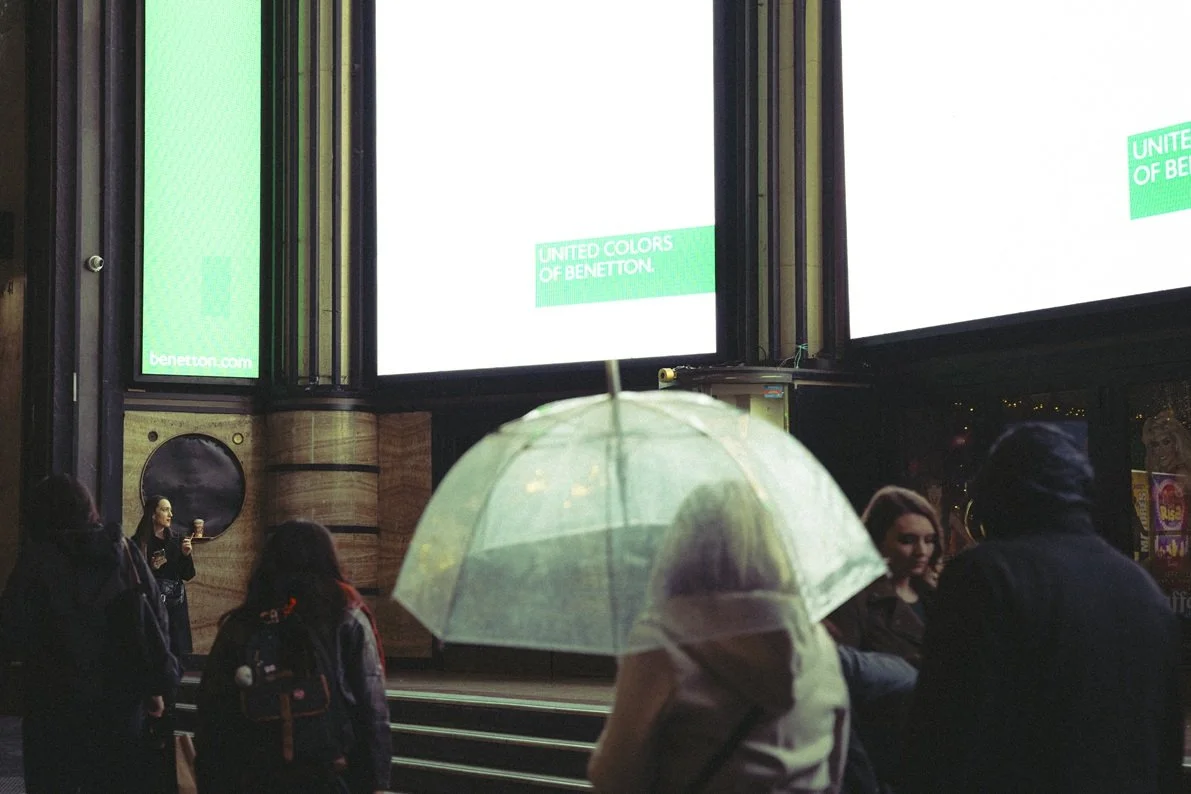
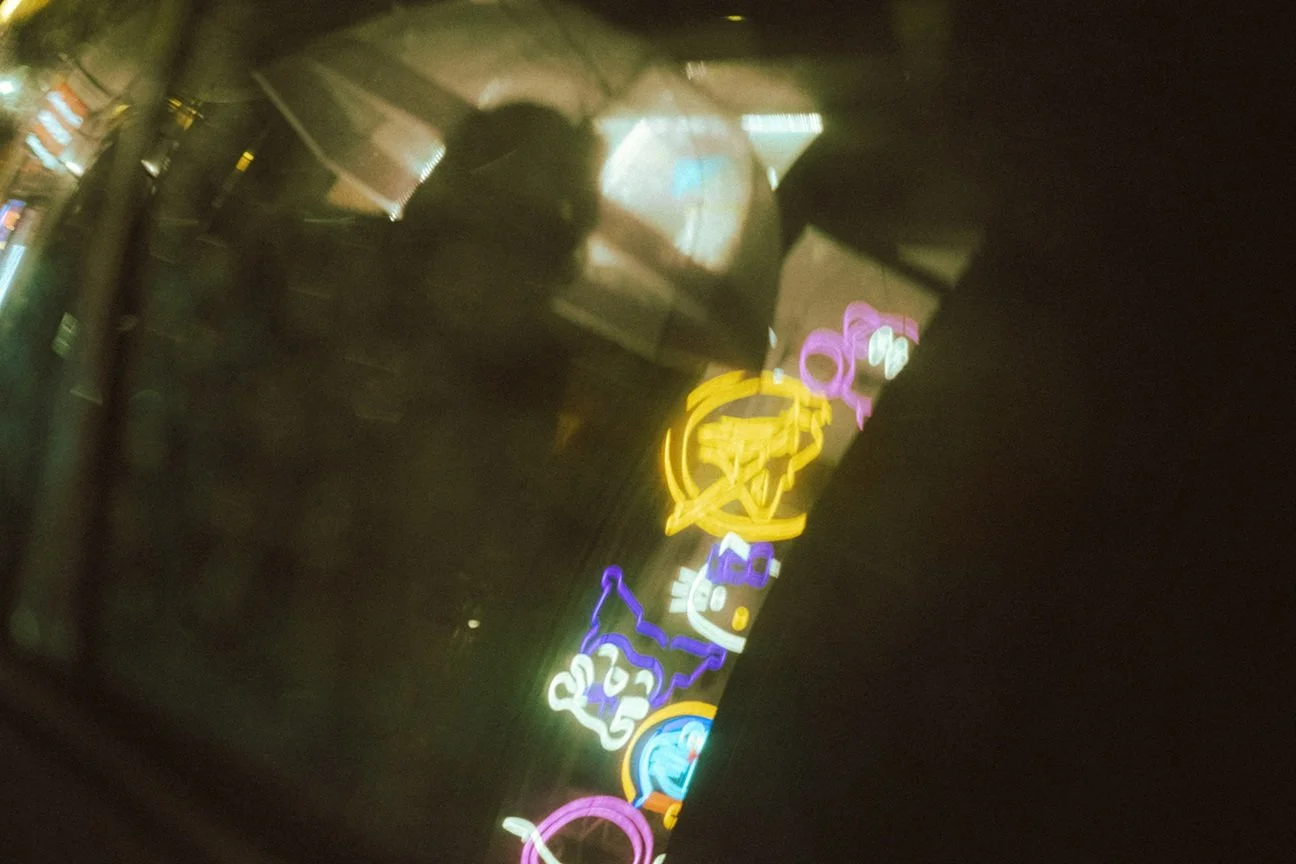
Rain changes Madrid. When the streets are wet and the city slows just a little, everything feels more intimate. The lights stretch across the pavement, reflections double the city, and familiar places suddenly look cinematic. These are the nights I enjoy photographing most, when Madrid feels softer, deeper, and more honest.
Tirso de Molina: Theater Lights, Open Space, and Quiet Drama
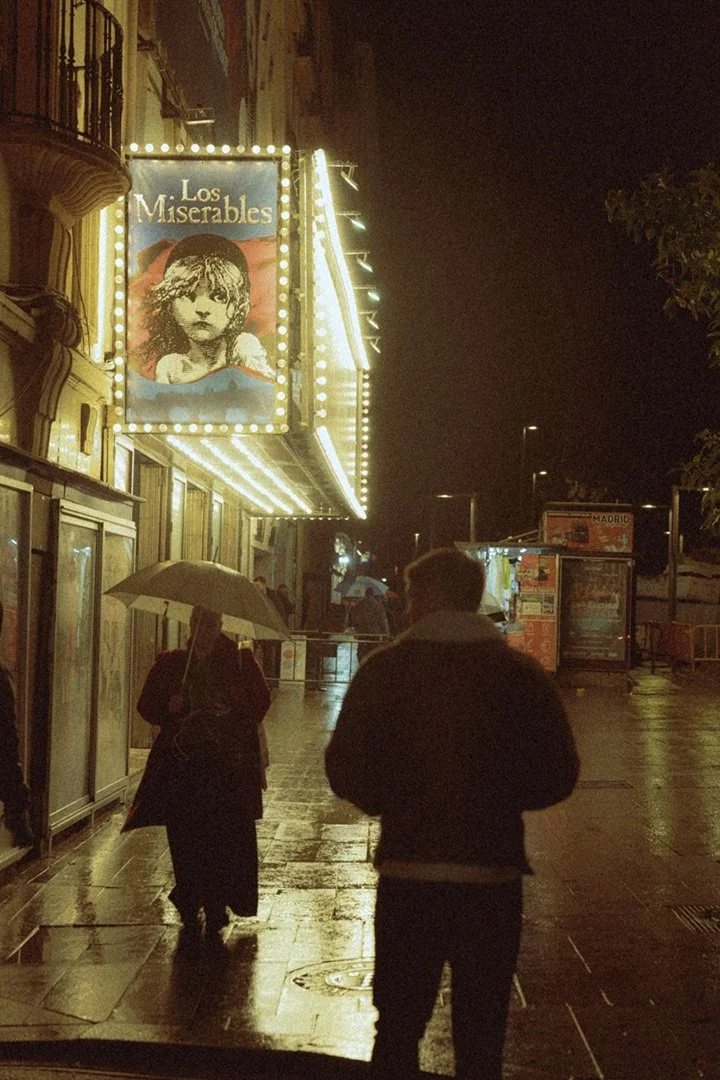
Tirso de Molina feels like a transition point in the city, where movement slows and space opens up. The square sits between neighborhoods, anchored by the statue of Tirso de Molina himself and surrounded by historic buildings and theaters. On rainy nights, the glow from nearby venues like Apolo Teatre (Teatro Nuevo Apolo) spills softly onto the pavement, mixing with streetlights and passing traffic.
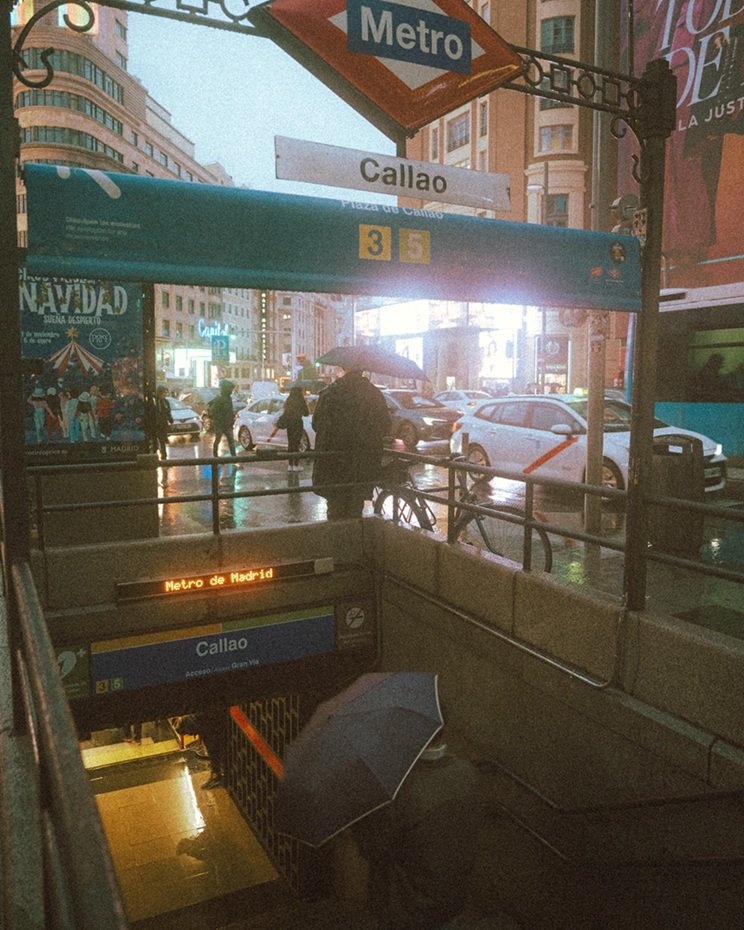
What makes Tirso special for photography is its openness. Unlike narrower streets, the square allows reflections to stretch and scenes to breathe. People cross diagonally, pause under umbrellas, wait near the metro entrance. There’s a theatrical quality to it, fitting for a place so closely tied to Madrid’s stage culture. Rain turns the square into a subtle set, where light, space, and human presence quietly interact.
This is where I slow down, frame wider, and let the city perform on its own.
Calle de Leganitos: Quiet Passageways and Unexpected Reflections
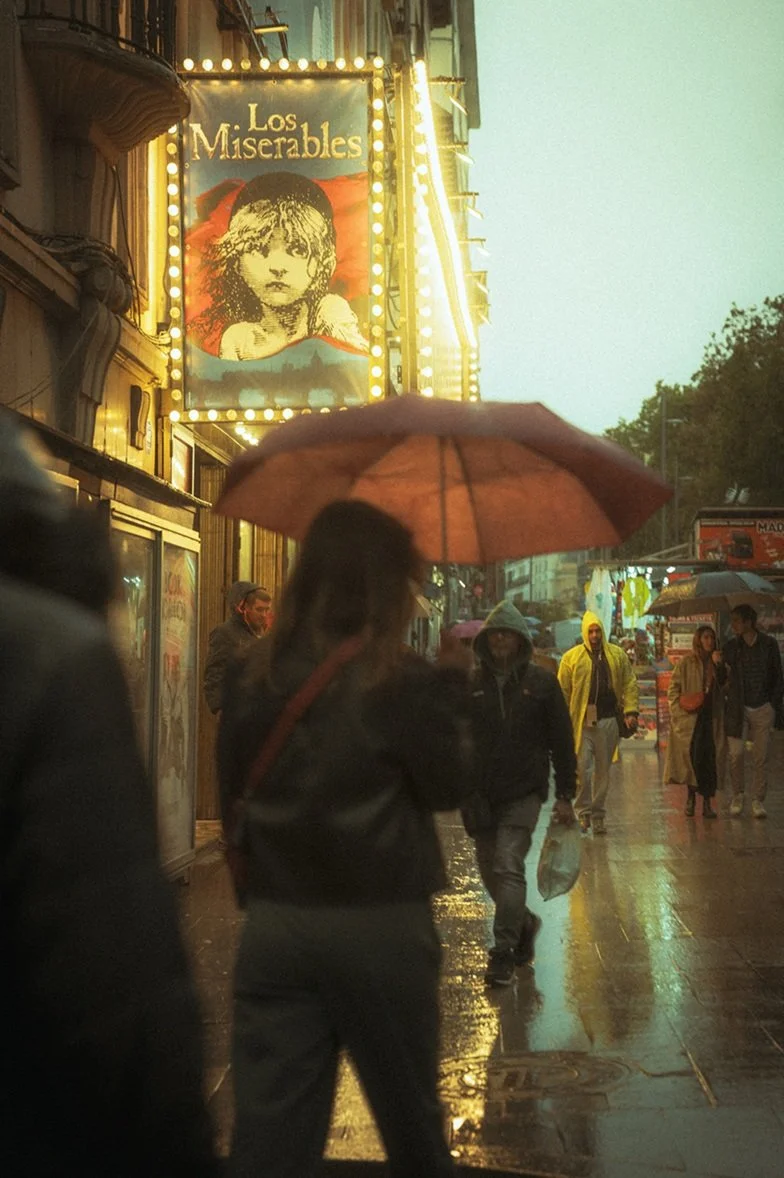
Calle de Leganitos is often passed through rather than noticed. Sitting between Plaza de España and Gran Vía, it doesn’t demand attention, and that’s exactly why it works so well at night. On rainy evenings, the street becomes a corridor of light. Shop signs, hotel entrances, and street lamps reflect cleanly on the narrow pavement, creating long, uninterrupted lines that feel almost cinematic.
What I love about photographing Calle de Leganitos is its sense of transition. People are usually on their way somewhere — heading uphill, turning toward Gran Vía, disappearing into side streets. The movement is steady but not chaotic. Rain simplifies the scene: fewer distractions, more focus on light, reflections, and silhouettes. It’s a place where composition comes naturally, where the city feels contained and quietly dramatic.
It doesn’t shout. It reveals itself slowly, especially after dark and after rain, and that’s when it becomes most photogenic.
Gran Vía: Neon, Movement, and Urban Rhythm
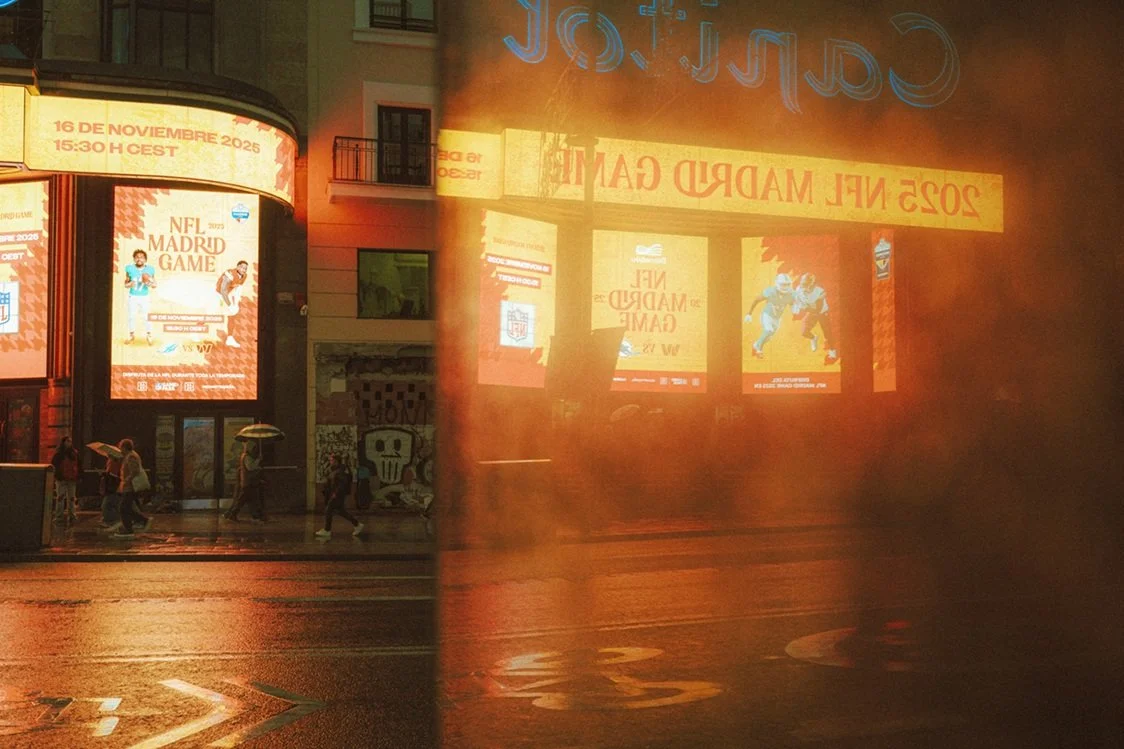
Gran Vía is Madrid in motion. The theaters, cinemas, and illuminated façades create a constant glow, especially around landmarks like the Capitol Building (Edificio Carrión). On rainy nights, the street becomes electric, lights multiply in the reflections, traffic streaks through the scene, and umbrellas create patterns in the crowd.
Photographing Gran Vía is fast and instinctive. There’s no waiting for the perfect moment; it arrives and disappears in seconds. Rain intensifies everything — contrast, color, energy. The wet asphalt turns the street into a mirror, amplifying the city’s rhythm and turning everyday movement into something cinematic.
Why I Chase Rainy Nights in Madrid
There’s something about rainy nights in Madrid that makes me feel completely alive. The city transforms — familiar streets feel new, every corner holds a hidden story, and the glow of the lights is amplified on the wet pavement. I feel free when I’m out photographing in the rain, wandering without a plan, letting the reflections and moods guide me. It’s a side of Madrid that doesn’t reveal itself every day, and that unpredictability is what I love most. The air smells different, the streets shimmer, and the city seems to slow just enough for me to see it in a way that feels both intimate and cinematic. Rainy nights aren’t just about taking pictures; they’re about experiencing the city in a way that makes every frame feel alive.
